
 What is Insomnia?
Insomnia can affect your mood, your work performance and your overall health. As the average person need 6-8 hours of sleep per night. However, it can vary from one person to another. But if you are sleeping less than that it can probably affect your quality of life.
Probably you know this feeling when it is 11;30 P.M and you have been rolling in bed for about an hour, maybe 2? The sleepless night? Or maybe you fall asleep and then wake up again in the middle of the night and you can not go back to sleep.
Insomnia is defined by a difficulty sleeping for 3 or more nights per week over 3 months. It is a common sleep disorder that make it hard to fall asleep, stay a sleep or it can cause you to wake up earlier than usual.
What causes Insomnia?
Insomnia can be classified into:
- Primary Insomnia. Which means there is no identifiable medical cause.
- Secondary Insomnia. Which means it is related to other primary cause.
Some common causes of insomnia:
- Work related stress.
- Jet lag.
- Hospitalization.
- Loss of loved ones.
- Changes to sleeping habits.
- Physical pain.
There maybe some causes due to illness like:
- Restless leg syndrome.
- Heart disease.
- Gastroesophageal reflux disease.
- Asthma or COPD.
- Migraines.
What are the risk factors of getting insomnia?
- Midnight work.
- Eating heavy meals before bed.
- Having emotional disorder like depression or anxiety.
- Sedentary life style.
- Watching television or using mobile phone before bed.
Natural ways to treat insomnia
There are 4 approaches that can help you get rid of insomnia which are:
1-Relaxation techniques
Relaxation training may improve sleep latency times and sleep maintenance.
The idea here is trying to decrease the heart rate, respiration rate, blood pressure and muscle tension. once you achieved those, your will enter a stage of relaxation that can help with your sleep.
These techniques include:
- Imagery training. basically replacing bad thoughts with pleasant thoughts. Like visualizing peaceful scenes (your happy place).
- Progressive muscle relaxation: It is believed that mental relaxation will be a natural outcome of physical relaxation. By relaxing tightened muscle groups one at a time in a specific order.
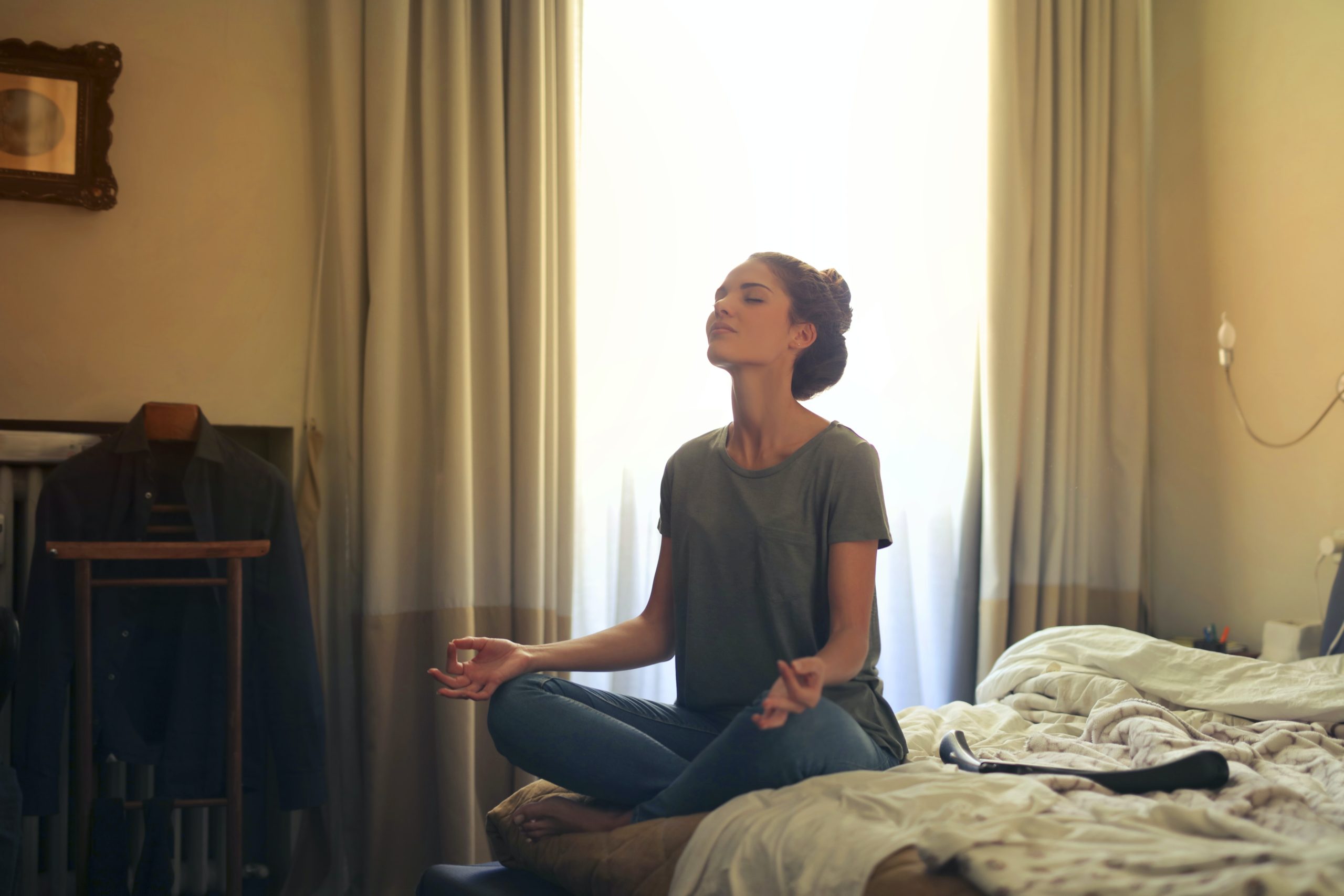
- Meditation: Plays a big role in insomnia. Mindfulness and meditation help bring about a relaxed state of mind that is conducive to falling asleep. This reaction is often described as the relaxation response.
One of the ways you meditate by finding a quite room before bedtime, deep breathing while engaging the diaphragm is often used in combination with other meditation techniques to enhance relaxation. An example of this is the 4-7-8 breathing method, in which you breathe in for four seconds, hold your breath for seven seconds, then breathe out for eight seconds.
2-Stimulus-control therapy
It is based in the concept that sleep is a conditioned response to bedtime and environmental cues.
The focus here is to eliminate maladaptive behaviors, with the overall goal of associating the bedroom with sleep.
These measures includes:
- Going to bed only when tired.
- Use bedroom only for sleep and intimacy.
- Get up at the same time in the morning regardless of sleep duration.
- Avoid napping during the day.
- If unable to sleep after 15-20 minutes, get out of bed and go to another room to read in a dimly lit environment.
3-Sleep restriction
It involves controlling the amount of time spent in bed but increasing the percentage of time asleep.
For example, if you sleep 6 hours and stay in bed for 8 hours, you should stay in bed only for 6 hours.
So this means you change your bedtime but maintain the wake-up time to establish good sleep-wake cycle. The idea here is to promote more rapid sleep onset and more efficient sleep.
4-Paradoxical intention
It focuses on removing performance anxiety by involving yourself in your most feared behavior which in this case “remaining awake”.
The technique here is by trying to remain awake in bed as long as possible when in bed, eyes are open and the room is dark.
When a person focuses on staying awake instead of trying to fall asleep, the anxiety of insomnia begins to vanish. Therefore, it’s easier for that person to eventually fall asleep.
By changing the emphasis from falling asleep to staying awake, the anxiety associated with trying to fall asleep slowly disappears.
Finally some sleep hygiene education
It focuses on behavioral and environmental factors that precede sleep and that may interfere with sleep.
Personal habits
√ Fix bedtime and awakening time.
X Caffeine 4-6 hours before bedtime.
X Nicotine near bedtime.
X Alcohol and heavy meals 4-6 hours before bedtime.
X Watching television and cell phone before bedtime.
√ Try to get a light snack such as bananas as they are rich in tryptophan which helps in sleeping.
√ Exercise regularly but not before bedtime.
Sleeping environment
- Use comfortable bedding.
- Find a comfortable temperature setting for sleeping and try to keep the room well ventilated.
- Block out all distracting noise.
- Try to make the room as dark as possible.
If you have tried all of these techniques and still suffers from insomnia, maybe it’s time to speak with your healthcare provider on the possibility of trying prescription medication that might help you.
DISCLAIMER
All content and information on this website including our programs, products and/or services is for informational and educational purposes only, does not constitute medical, psychological or health advice of any kind and we do not warrant that the information presented herein is free of any errors or omissions. We are not providing medical, health care, nutrition therapy or coaching services to diagnose, treat, prevent or cure any kind of physical ailment, mental or medical condition. A professional-client relationship with you is only formed after we have expressly entered into a written agreement with you that you have signed including our fee structure and other terms to work with you in a specific matter.
Although we strive to provide accurate general information, the information presented here is not a substitute for any kind of professional advice, and you should not rely solely on this information. Always consult a professional in the medical and health area for your particular needs and circumstances prior to making any medical or health related decisions. For your health related questions, please seek the advice of a licensed physician or any other qualified health care provider immediately.
What to read next
https://simplifiedpharmacy.com/2021/07/04/sunburn-sunscreens/
https://simplifiedpharmacy.com/2021/07/03/6-supplements-you-should-take/
https://simplifiedpharmacy.com/2021/07/01/ways-to-deal-with-anxiety/